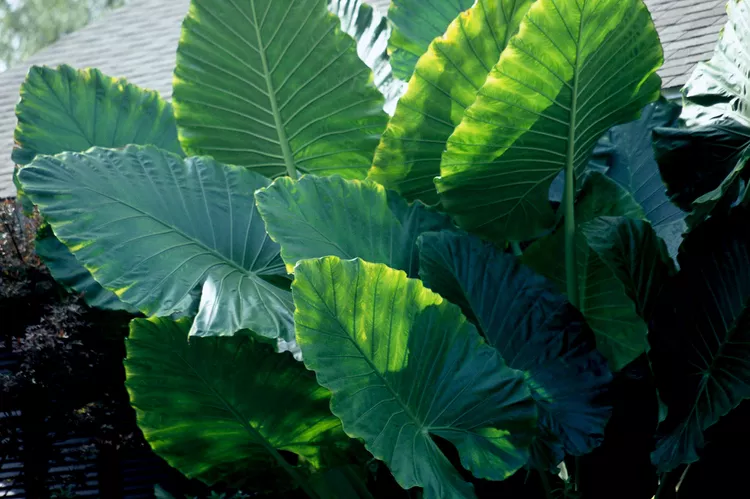
Huge leaves and bold vein patterns make elephant’s ear stand out. Popular indoors and outdoors, this tropical plant makes an eye-catching statement no matter where it is planted. Call on it to serve as a focal point, where its easy-care foliage will add interest throughout the growing season and year-round indoors.
Elephant’s ear has become a popular houseplant. It’s held court in the garden for years but is making bold statements indoors thanks to some showy leaf varieties suitable for indoor spaces. Add houseplant types of elephant’s ear to end tables, desktops, and mantels for a tropical touch.
Elephant’s ear is toxic to humans and pets.
Elephant's Ear Overview
| Genus Name | Alocasia spp. |
| Common Name | Elephant's Ear |
| Plant Type | Annual, Bulb, Houseplant, Perennial |
| Light | Part Sun |
| Height | 1 to 8 feet |
| Width | 1 to 6 feet |
| Foliage Color | Blue/Green |
| Special Features | Good for Containers, Low Maintenance |
| Zones | 10, 11 |
| Propagation | Division |
Where to Plant Elephant’s Ear
Elephant’s ear grows wherever there’s some shade, moist soil, and warm temperatures. It’s striking alongside ponds where its massive leaves create beautiful reflections in the water. An excellent plant for a shaded porch or patio, it thrives when planted in large containers.
Elephant’s ear is cold-hardy in USDA zones 10–11. In colder climates, plant it in containers and move it inside in winter. Or grow it as an annual and purchase a new plant or new bulbs every spring, which is what most gardeners do because moving the large plants takes effort.
How and When to Plant Elephant’s Ear
Plant elephant's ear in spring after all danger of frost has passed and temperatures are between 60° and 85°F.
Plant elephant ear bulbs 4 to 6 inches deep, with the top of the bulb (the end with the concentric circles) facing upward. If you are unsure which end is up, plant the bulb on its side; it will send the green up and the roots down. The bigger the bulb, the deeper it should be planted so dig a deeper hole if necessary to fit the entire bulb. Elephant’s ear bulbs spend about three weeks growing roots before you’ll notice any activity above ground.
To get a head start on the growing season, start elephant’s ear from tuberous roots indoors. Plant the tubers in large nursery pots six to eight weeks before the last frost in spring and move them outdoors as soon as the nighttime temperatures are above 60°F.
Elephant’s ear plants grow best when their roots aren’t disturbed after they begin to grow. If you live in a cool climate where elephant's ear won't survive the winter, sink the potted plant into the ground so that the pot’s rim is level with the surrounding grade. That allows you to lift the plant out of the ground in the fall for overwintering without disturbing the roots.
Elephant’s Ear Care Tips
Light
Elephant’s ear grows best in part shade or filtered sun. Prolonged direct sunlight scorches its leaves, marring them for the duration of the season. If possible, plant elephant’s ear in a location where it receives morning sunlight and afternoon shade.
Soil and Water
Well-drained, moist soil high in organic matter that is slightly acidic (pH between 5.5 to 6.5) is ideal for elephant’s ear.
Water outdoor elephant’s ear plants regularly. Indoor plants grow best when soil is allowed to dry out slightly before watering.
Temperature and Humidity
Elephant’s ear is native to Southeast Asia, where it enjoys heat and high humidity. Daytime temperatures should be between 70°F and 85°F. Nights should be no colder than 60°F.
In cool climates, overwinter elephant’s ear plants in containers by bringing in the potted plants before the first frost. Place them in a cool, humid location and reduce watering in winter.
The plant enjoys a humidity level above 50 percent. When grown indoors, it benefits from a humidifier or sitting on a tray filled with rocks and water to keep the humidity high.
To overwinter elephant's ear in Zone 10-11, wait until the stems of the plant die back naturally when the weather gets cooler, Do not cut them, as it may lead to rot. Pile up pine needles, chopped-up leaves, or grass on top of the plan, or create a cage of chicken wire or something to hold them in. Uncover the plants in the spring.
Fertilizer
Fertilize elephant’s ear plants in the garden in spring, summer, and fall to support the large leaves using a water-soluble fertilizer that contains equal parts of nitrogen, phosphorus, and potassium, such as 20-20-20. For frequency and amounts, follow the manufacturer’s instructions Do not fertilize the plant during its dormancy period in the winter.
Fertilize indoor plants with a houseplant fertilizer in spring and summer and cease fertilizing in fall and winter.
Pruning
Cut off individual leaves as they become damaged during the season using a disinfected blade to prevent disease spread.
Just before the first frost, cut all the foliage to about 6 inches above the ground and carefully dig up the tubers. Place them in a plastic bag or pot and cover them with a mix of moistened potting soil and peat moss. Store them in a cool, dark place; they need to remain dormant over winter.
Potting and Repotting Elephant’s Ear
Use pots with large drainage holes and fill them with well-draining potting soil. Unglazed ceramic pots are ideal for elephant's ear because they let excess water evaporate.
Repot the plant when the roots have outgrown the container. A telltale sign is when the roots grow out of the drainage holes or become visible on the soil surface. The best time for repotting is in the spring before the new growth starts. Use a pot about 3 to 5 inches larger than the current pot.
Pests and Problems
Unfortunately, those huge leaves attract familiar garden insects, including aphids, mealybugs and spider mites, all of which can be treated with a horticultural soap or neem oil.
In wet periods, when water remains on the leaves, the plant might develop fungal leaf blight. If it's severe, treat it with a copper fungicide applied weekly during rainy weather and every two weeks during dry periods.
How to Propagate Elephant’s Ear
Elephant’s ear plants send out underground runners that eventually rise to the surface and begin growing a new plant. Divide the plant by using a sharp shovel to cut the pup from the parent plant, making sure it has roots attached. Put the pup in a pot with well-draining potting mix. If the pot is inside, water it deeply once a week. If the pot is outside, water the plant every one to two days until it is established.
Types of Elephant’s Ear
African Mask Plant
Alocasia amazonica is features large, leathery arrowhead leaves in olive green, bronze, or maroon. It grows 3 feet tall.
‘Black Magic’ Elephant’s Ear
The purple-black leaves of Alocasia infernalis ‘Black Magic’ have a brilliant sheen that makes them look like they have been lacquered. This slow-growing plant reaches 10 to 12 inches at maturity.
Giant Upright Elephant’s Ear
Alocasia macrorrhiza bears huge, glossy leaves shaped like alligator heads on rigid stems. This clumping plant grows to 10 to 15 feet tall and spreads 6 to 8 feet.
Elephant’s Ear Companion Plants
Pair this tropical plant with other easy-to-grow tropicals for a lush, vibrant garden.
Canna
The fast-growing plant, native to South and Central America, is known for its flashy flowers and equally stunning leaves, and its easy-to-care-for nature makes it a winning addition to landscaping of all varieties. Hardy and capable of withstanding the hottest of temperatures, canna produces spectacular blooms all season long. Zone 7-10
Coleus
Few foliage plants can show off like coleus, which offers intricate and stunning color patterns on its shapely leaves. Coleus is an herbaceous perennial in its native range, but most people grow it as an annual. In the past several years, coleus breeders have developed new varieties that are well-suited for growing in full sun, partial shade, or full shade. With all the available colors, sizes, and leaf shapes, coleus has become a versatile choice for creating color and contrast in container gardens and flowerbeds alike.
Sweet Potato Vine
Gardeners turn to the sweet potato vine for its ability to power through almost anything while bringing unique shapes, sizes, and colors to a pot or plot. A vigorous annual, it thrives in the summer heat. Typically used as spillers in containers, sweet potato vines also make fantastic groundcovers. Sweet potato vines do best in a humid climate. Planted on a sturdy trellis, they are a fast way to add privacy to your garden.
Caladium
Native to South and Central America, caladiums are stunning tropical plants with colorful leaves that brighten up shadier areas in your garden. They are commonly grown as annuals, or their bulbs are dug up each fall and replanted every spring. Caladiums were initially limited to shadier locations with a couple of hours of dappled sun or less intense morning sunlight. However, newer varieties tolerate some direct sunlight, especially in northern areas. Zone 9-11