Garlic does most of its growing underground, which can make it hard to know exactly when to harvest garlic bulbs. Pick garlic too early and you’ll end up with small cloves, but pick garlic too late and you may lose your garlic harvest to decay. If you’re new to growing garlic, timing your harvest can feel like a balancing act, but these garlic harvesting tips will help you pinpoint the perfect time to harvest garlic bulbs and garlic scapes.
When to Harvest Garlic
As the saying goes, “good things take time,” and that’s definitely true if you want to grow garlic. Compared to other food crops, garlic is a relatively slow-growing plant and it takes about 8 to 9 months for bulbs to grow large enough to harvest. Most growers plant seed garlic in fall and harvest mature bulbs the following summer in July or August; however, garlic may be ready to harvest a bit earlier in warmer climates.
If you grow hardneck garlic varieties, you can harvest edible garlic scapes while you wait for your garlic bulbs to mature. Scapes are usually harvested in June when their stems lengthen and begin to twist into coils and spiral shapes. But if the garlic scape stems start to straighten out after coiling, they’re past their prime!
Garlic bulbs are harvested about one month after garlic scapes appear, but different varieties of garlic mature at different rates and softneck garlic varieties don’t produce scapes at all. This variability can make it hard to judge if garlic is ready to harvest, but there are a few signs that will let you know that your garlic crop is mature.
How to Tell When Garlic Bulbs Are Ready to Harvest
Like onions, garlic leaves will begin to yellow and brown as bulbs reach maturity. When these edible plants have two dead leaves at their base and a third leaf is beginning to yellow, stop watering your garlic plants and allow the soil to dry out. Wait a few days and then dig up a test garlic plant or two to see how the bulb is developing.
If the test garlic has a well-formed bulb with garlic cloves that fill out their papery skins, it’s time to harvest the rest of the garlic from your culinary gardens. But if the test garlic plant has small and poorly developed cloves, you may want to wait a bit longer before harvesting the rest of your crop. Regardless of clove size, garlic plants should be harvested by the time ½ of their leaves turn brown as cloves can spoil if they’re left in the ground too long.
While browning leaves are a sign that garlic bulbs are reaching maturity, brown or yellowing leaf tips can also be sign of a nitrogen deficiency. If your plants are developing discolored leaf tips early in the season, your garlic crop may need more fertilizer.
How to Harvest Garlic
While it can be tempting to simply pull garlic plants up by their leaves, garlic leaves are not that sturdy and they’ll usually snap off the bulb if you tug on them. A better option is to use a shovel or gardening fork to loosen the soil around your plants before lifting the bulbs free from the earth. Just be careful to avoid damaging garlic with your shovel as cut or bruised garlic doesn’t last long in storage.
If possible, harvest garlic during dry weather and store dug garlic plants in a shady spot until you can bring them indoors. As you dig up your garlic, leave the garlic leaves and roots attached to the bulbs and simply shake away extra dirt. Too much sun or moisture can cause garlic harvests to spoil and lose their flavor fast, so avoid rinsing your cloves with water!
Any garlic cloves that are damaged during harvesting should be used right away to prevent spoilage, but the rest of your garlic harvest can be eaten fresh or stored for later use. Just keep in mind that if you want to store garlic in your pantry or root cellar, you’ll need to cure your garlic bulbs first.
How to Cure Garlic Bulbs
Curing isn’t necessary if you intend to freeze, can, or eat garlic fresh, but it is recommended if you want to store garlic bulbs at room temperature or in a root cellar. This process works well on both hardneck and softneck garlic and it helps to reduce excess moisture in garlic cloves so they last longer.
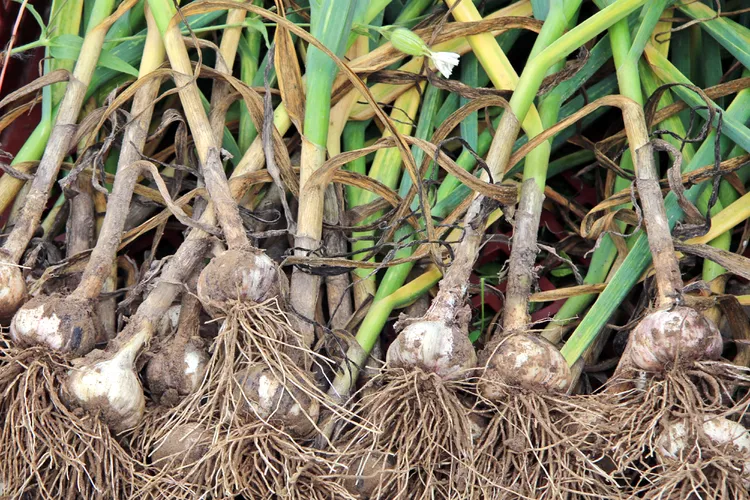
Garlic is usually cured in a warm, dry, sheltered spot with good airflow and minimal light. Keep the leaves and roots attached to your garlic bulbs and spread your garlic harvest out in a single layer on a flat surface or loosely bundle garlic plants in bunches and hang them upside down with a bit of twine. If you’re into DIY, you can make a simple garlic drying rack by stapling mesh to a wooden frame and drying your garlic on the mesh screen.
Garlic should be cured for about 3 to 4 weeks until the bulb skins are perfectly dry and papery, the roots are hard and bristly, and the garlic leaves are brown and brittle to the touch. After curing, clip the garlic leaves off hardneck garlic varieties and store the bulbs in mesh bags, or twist softneck garlic leaves into braids for hanging. If your garlic harvest is very dirty, you can remove the outermost layer of papery garlic skins, but don’t remove so many skins that your garlic cloves are exposed.
How to Store Garlic
After curing, garlic bulbs can be stored at room temperature, but they’ll last longer if they’re kept in a cool, dark place with good airflow and low humidity. Refrigerators are not ideal for storing garlic since they have relatively high humidity levels. But if you happen to have a dry root cellar or basement that stays around 32°F to 40°F, that’s a perfect storage spot for garlic.
When properly stored, softneck garlic will usually stay fresh for about 6 to 8 months, while hardneck garlic will last about 3 to 4 months. To ensure your garlic lasts through the winter, check your harvest from time to time and remove any soft or sprouted cloves as soon as you see them.
If you don’t want to store garlic in a root cellar, garlic cloves can be frozen whole or chopped and frozen in ice cube trays. Cloves can also be dehydrated and ground into garlic powder, or cloves can be pickled or canned. However, as garlic is a low acid food, it will need to be canned with vinegar or a pressure canner for food safety.
Storing garlic through the winter can provide your kitchen with all the delicious garlic you need for your favorite garlic recipes. But don’t forget to save some garlic for planting too. Select the largest cloves from your largest garlic bulbs and store them in a cool, dark spot until you’re ready to plant them.