What Every Homeowner Needs to Know About Dethatching Lawns

37.9K
378
71
2025-11-12
What Every Homeowner Needs to Know About Dethatching Lawns

Thatch is a matted layer of grass stems, roots, stolons, rhizomes, and other organic debris that builds up faster than it can decompose. Thatch accumulates immediately below the green surface of the lawn—on top of the soil at the base of the blades. A layer of thatch less than ½ inch thick is normal and isn't cause for action. A thin layer of thatch is a good thing; it reduces soil compaction and increases tolerance for cold and heat by protecting the crown (the point on the plant where grass growth originates). Thatch also reduces water loss through evaporation.

If the thatch is more than ½ inch thick, it may cause trouble, and it might be time to dethatch the lawn. Think of it as a layer of plastic wrap on top of the soil. Your grass won't have access to air, water, or nutrients because thatch blocks them from reaching the roots. A thick layer of thatch can harbor disease-causing insects and fungi, prolong high humidity that promotes disease, and bind or tie up pesticides. As thatch builds, grass roots knit into the thatch layer instead of the soil, where they easily succumb to environmental stresses such as prolonged periods of hot, dry weather.

What Causes Thatch?

There are numerous causes for excessively thick thatch. The most common ones are:

  • Poorly aerated soil.
  • Excess nitrogen, which leads to excessive growth.
  • Too much water, which reduces the amount of oxygen in the soil.
  • Overzealous use of pesticides that kill earthworms and microorganisms that break down organic matter.

Some lawn grass varieties are more prone to developing thatch than others. For example, among the cool-season grass species, Kentucky bluegrass is a prime offender for spreading aggressively and accumulating thatch. Tall fescue may be a better choice for avoiding thatch. Bermudagrass is more likely to accumulate thatch than zoysiagrass among the warm-season grass species. Check with your local cooperative extension service to better understand the grass species that work in your area.

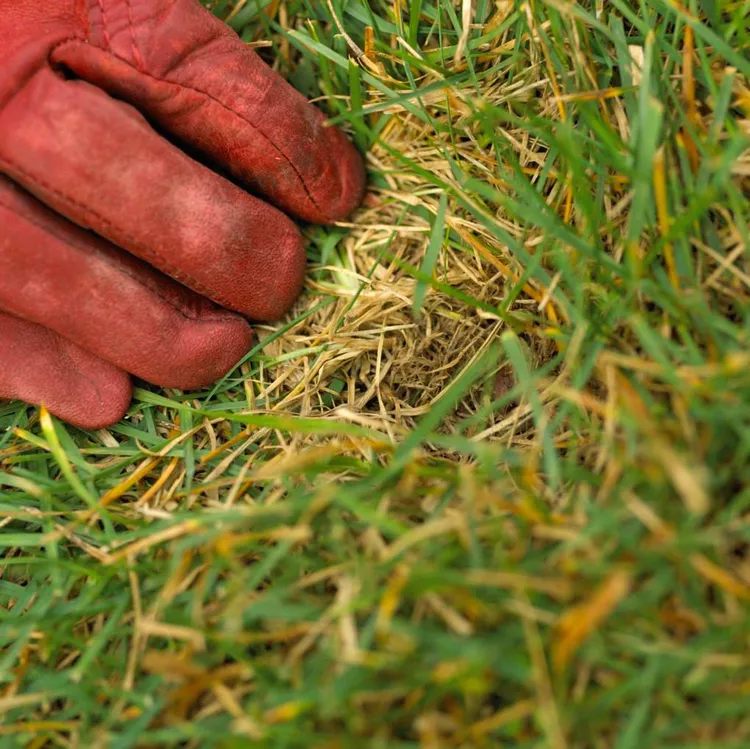
There are multiple ways to determine if your lawn has a thatch problem. The easiest is to check to see if your lawn is green on top but brown below. The best time to check is after you mow when you've just cut off the top green growth. If you have thatch, the lawn will look brown or dead. Another test is to walk across the lawn: If it feels spongy, it may be due to thatch.

If you're still unsure, use a spade or knife to cut several small plugs from the lawn. Measure the thatch, which appears as a layer of spongy brown material between the grass and the soil. Dethatching lawns is in order if the thatch is more than ½ inch deep.

When Is the Best Time for Dethatching Lawns?

Dethatching lawns should only be done when conditions are best to promote rapid recovery of your grass type. The best time to dethatch cool-season lawns is late August to early October, depending on your location, when the grass grows vigorously and few weed seeds are likely to germinate. A light application of fertilizer (½ to ¾ pound actual nitrogen per 1,000 square feet) and regular, deep watering will speed the lawn's recovery.

Dethatch warm-season lawns in late spring or early summer after they are completely green and growing rapidly.

How Do I Dethatch My Lawn?

There are several ways of dethatching lawns. For lawns with moderate levels of thatch, aerating may do the trick. Or use a cavex rake (also known as a thatching or lawn dethatcher rake) with unusual semicircular tines. Those knifelike blades cut through the sod and pull out the thatch. The most effective solution for dethatching lawns that are large and have serious thatch problems is a vertical mower (power rake). Resembling a heavy-duty power mower but with a series of spinning vertical knives, it cuts through the thatch.

Dethatching often creates a large volume of debris that must be removed. If the debris is weed-free and you have not used herbicides or pesticides on your lawn, compost it. You can also check to see if your city has a composting program for yard waste.

How Do I Reduce Future Thatch Accumulation?

Thatch is inevitable, but appropriate lawn care practices will reduce the severity in the future. Use the right type and amount of fertilizer for normal growth. Water deeply and thoroughly, but infrequently. Maintain proper pH levels for your grass type and adjust them if needed. Aerate your lawn regularly to make room for new growth.

How Do I Aerate My Lawn?

The roots of all plants need air as much as water, which is why aerating your lawn is so important. It's a simple process of perforating the soil (and any thatch) while removing plugs of lawn that leave behind small holes that allow water, air, and fertilizer to get to roots. Aeration enables the roots to grow deeply, producing a more vigorous lawn.

The best time to aerate cool-season lawns is late August through early October. The second best time is in the spring. (Wait until you've mowed the lawn twice before aerating in spring.) Follow with regular, frequent watering. The best time to aerate warm-season lawns is in late spring or early summer—or anytime followed by four weeks of good growing weather. Lawns with severe thatch problems may need twice-yearly aeration.

Frequently Asked Questions

  • Should I mow the lawn before dethatching it?

    Mow the lawn a little shorter than usual and water it lightly before dethatching. For the best results, dethatch when the soil is slightly moist, not dry. Don’t attempt to dethatch wet soil though; you’ll end up creating unwanted bare spots.

  • Should I dethatch my lawn before I overseed it?

    A thatch layer prevents new seed from reaching the ground. Dethatch right before you overseed to give seed the best chance to penetrate and grow.

Related Article

36 Fall Planters to Bring the Beauty of the Season to Your Doorstep
3.1K
62
24

36 Fall Planters to Bring the Beauty of the Season to Your Doorstep

Get inspired with these plans for fall planters to create colorful displays with annuals, perennials, grasses, and more.
26 Tiny Plants Perfect for Miniature Landscaping
3K
151
46

26 Tiny Plants Perfect for Miniature Landscaping

Create a miniature plant garden by finding out how to pot your tiny plants based on light and zone. See our list of small plants perfect for your containers.
How to Make a Hanging Basket for Your Front Porch or Patio
34.7K
1.7K
225

How to Make a Hanging Basket for Your Front Porch or Patio

Learn how to make a hanging basket that will grow and add color and life to your front porch. Hanging baskets are a lovely way to welcome guests.
16 Pretty and Simple Combinations of Window Box Flowers for Shade
29.7K
2.7K
615

16 Pretty and Simple Combinations of Window Box Flowers for Shade

Here are 16 beautiful and easy-care combinations of window box flowers for shade to add color wherever you need it.
How to Make a Pumpkin Succulent Centerpiece
7.3K
725
311

How to Make a Pumpkin Succulent Centerpiece

Use these simple step-by-step instructions for creating a fall pumpkin succulent planter centerpiece to decorate your dining room table all season.
How to Plant and Grow Winter Aconite
5.8K
115
28

How to Plant and Grow Winter Aconite

Find essential tips for growing early-blooming winter aconites, including how and when to plant the tubers.
How to Plant and Grow Plectranthus
14.4K
863
371

How to Plant and Grow Plectranthus

Find essential growing tips for plectranthus, a genus of tropical foliage plants that come in many sizes, shapes, and textures.
How to Plant and Grow Elephant’s Ear
3.6K
145
59

How to Plant and Grow Elephant’s Ear

Find key tips for growing elephant’s ear, a tropical plant with huge leaves and bold vein patterns that is an eye-catcher outdoors and indoors.
The 17 Easiest Roses to Grow to Add Tons of Colorful Blooms
43.1K
1.7K
688

The 17 Easiest Roses to Grow to Add Tons of Colorful Blooms

The easiest roses to grow, including small rose bushes and 'Rainbow Knock Out,' bloom profusely and have excellent disease resistance.
How to Attract Hummingbirds So They'll Visit Your Garden
24.7K
2.2K
777

How to Attract Hummingbirds So They'll Visit Your Garden

Here's how to attract hummingbirds to your garden so these adorable, fascinating birds become frequent visitors and add their charm to your landscape.
Light Up a Shady Spot with This Easy-Care Summer Shade Garden Plan
17.4K
521
161

Light Up a Shady Spot with This Easy-Care Summer Shade Garden Plan

Enjoy this easy-care, summer-blooming shade garden plan that combines hydrangeas, roses, lilacs, and more.
5 Garden Plans for Solving Your Yard’s Most Challenging Problems
36.9K
738
214

5 Garden Plans for Solving Your Yard’s Most Challenging Problems

If there are spots in your garden that never seem to flourish no matter what you try, our planting plans can help. Download our free guides.
This Colorful Hot-Summer Garden Plan Is Perfect for Warmer Months
38.2K
1.1K
435

This Colorful Hot-Summer Garden Plan Is Perfect for Warmer Months

The blooming flowers in this design look sizzling, even through heat waves.
Use This Slope Garden Plan to Add Color and Stop Erosion
30.6K
2.1K
943

Use This Slope Garden Plan to Add Color and Stop Erosion

A low-maintenance mix of annuals and perennials creates the perfect border for a set of steps.
8 Free Vegetable Garden Plans to Bring a Harvest to Your Backyard
22.5K
1.1K
112

8 Free Vegetable Garden Plans to Bring a Harvest to Your Backyard

If you would like to create a vegetable garden but aren't sure where to start, these free plans will get you on track to grow a healthy, beautiful selection of edible plants. Whether you want just a small raised bed or a full scale patch of produce, you'll find plenty of ideas here.
This Colorful Herb Garden Plan Enhances Your Yard and Dinner Plate
8.8K
439
215

This Colorful Herb Garden Plan Enhances Your Yard and Dinner Plate

Enjoy a display that not only smells and tastes delicious, but also looks gorgeous!
How to Plant and Grow Goumi Berry
24.5K
1.7K
599

How to Plant and Grow Goumi Berry

Hardy and resilient goumi berry shrubs are a unique fruit to grow in cool climates. Find out how to care for this
How to Plant and Grow Radishes
11K
551
203

How to Plant and Grow Radishes

Learn how to plant and grow radishes from seed so you can harvest the tastiest roots for salads and snacking.
How and When to Harvest Garlic at its Peak
9.7K
970
174

How and When to Harvest Garlic at its Peak

Knowing when to harvest garlic can be tricky. Use these tips to pick garlic bulbs at the perfect time and store your harvest so it lasts!
Here’s What Not to Put in Compost to Avoid a Contaminated Bin
33.6K
2.7K
322

Here’s What Not to Put in Compost to Avoid a Contaminated Bin

Composting is a simple way to turn your kitchen and yard waste into food for your garden. But some of these items should never be in compost.